by Dylan Thomas Newman

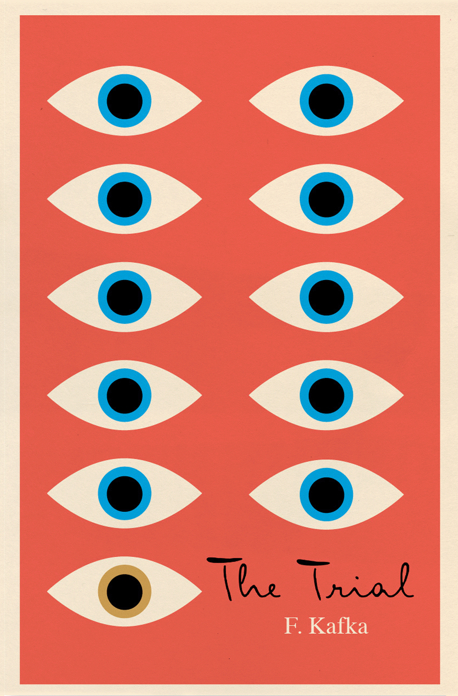 In "The Trial", Kafka's Josef K. is arrested by an unnamed law enforcement agency for an unspecified crime. The rest of the book centers around his hearings, wherein he navigates an immense and robotic bureaucracy headed up by mysterious judges and other shady figures, all automatons of the vast trial system that no one seems to have any answers about. Everything is secret, from the charge, to the rules of the court, to the authority behind the courts – even the identity of the judges at the higher levels.
 The characters and dialogues move quickly and without patience, like Alice in Wonderland's "White Rabbit," only slightly more calmed. They outpace the confused Josef K. in his quest for resolution, hasting him to and from, recommending this and that bureaucrat and office. With even his attorney aloof and unhelpful, Josef K. is left to fend for himself against this leviathan organization, which ultimately he succumbs to.
In Kafka's most famous novel, "Metamorphosis" - considered one of the seminal works of fiction of the 20th century - protagonist Gregor Samsa wakes up one

Gradually their treatment of Gregor becomes less humane. They no longer feel sorry for his condition and instead become annoyed that he can no longer provide income for the family. Gregor becomes as an actual pest to them, often keeping under the family couch when other characters are nearby, lest he annoy them or disgust them with his appearance. Eventually he retires to his bedroom away from the family and their various guests to die, which prompts no protests from the family.
 In both "The Trial" and "Metamorphosis", the narratives are constructed as to induce a crushing, smothering self-injection of the reader into the protagonists' extreme isolation. Fundamental building blocks of the stories' foundation are purposefully omitted for the reader to fill them in with the worst and most claustrophobic nuances of their own minds. What does Gregor Samsa look like? The reader must extract characteristics from uncomfortable parts of his own mind that would make him feel grotesque and repulsive. What crime did Josef K. commit, who is the group charging him, and how will he get help as everyone and no one bear down on him? As the reader more deeply commits to the book, he can only wonder what crime he committed, and how he would react. The reader takes on Josef K.'s hopelessness.
Gregor Samsa and Josef K. are made wholly different, and are therefore unwillingly detached from society via their respective changes, omnipresent as they are. Those changes redefine their very existences - social, mental, physical, even spiritual. Anyone with disfigurements or reputational damage like these characters can probably relate. One can only imagine the cold, uncaring, unfair spotlight ubiquitously present in the minds of AIDS patients, or wrongfully convicted rapists.
But there is another group that can relate as well. Perhaps even more so. A group isolated not by physical ailment, the crushing thumb of an impartial organization, or indeed any such negative thing. A group forsaken, rejected , and even excommunicated by society not for crimes or medical necessity, but because they carry a truth. A simple truth, but world-changing nonetheless, that says morality is more important than ideology. That every discipline - science, economics, politics, religion - is not allowed to bypass morality and the natural laws inherent in every man that interpret it.
This seemingly common sense assumption is anything but. Adherents of that very natural philosophy find themselves scorned by the Majority - a group that remains heavily dependent on immorality to retain its living standard. Members of that class often use government force - violence, or the threat of it - to obtain the wealth of others. American right-wingers will be quick to correctly identify such tactics as the modus operandi of welfare recipients. Accurate as they are, those same right-wingers remain blissfully ignorant that they too employ such political scheming, every time they walk their children into a government school or enter a 'public' roadway, et cetera.
It is then that they ironically shout the same rationales used so wantonly by
The tiny minority who champion morality recognize the culminating theory behind these statements: "Without using the government's wealth redistribution services to fund the programs we like, we won't have what we want."

For these reasons, Mr. Lew Rockwell says:
What does this tell us? It tells us that conservatism, as we once knew it, is
hopelessly corrupted. You can tell it at cocktail parties, where self-identified conservatives sneer at the very idea of liberty... It is long past time for every right-thinking American to reject the term 'conservative' as a self-description... To those who have lingering attachments to conservatism, I will close with the words that Murray Rothbard address to the Young Americans for Freedom in 1960: 'Why don't you get out? Breathe the clean air of freedom. And then take your stand, proudly and squarely, not with the despotism of the power elite, and the government of the United States, but with the rising movement and opposition to that government. Then you will be libertarians indeed - in act as well as in theory. What hangover, what remnant of devotion to the monster state, holds you back? Come join us.'
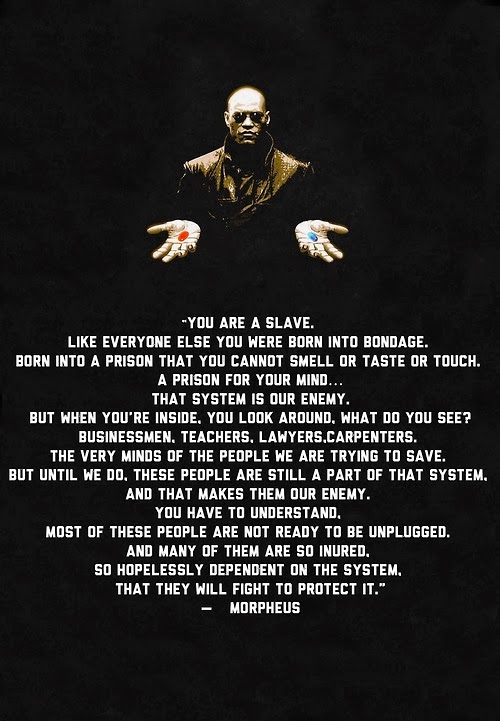
The moral minority I write of has rejected that hangover, rejected any last remnant of devotion to that immoral monster state. For this reason, the rest of society surrounds them as white blood cells attacking a foreign entity, for foreign they are indeed.
They walk through life not in a daze, or isolated as on desert island, but fully cognizant, isolated instead by the sea of sleepers moving all around them - those whose minds have been put to rest by the machinations of evil men to rob Peter, pay themselves, and sheer off crumbs to Paul. People who've forgotten liberty.
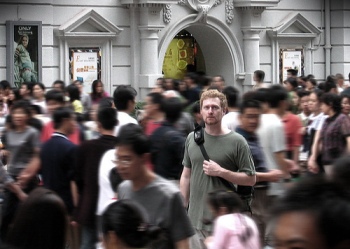
They stand in public places and visualize - nay, virtually see - the links their peers around them have to the machine. The very machine that holds them down. The machine that's purposefully blinds them to its horrors. The machine that makes them think it's not only good, but "the apotheosis of society." The machine that is fueled by debt and theft and death.
This minority persists onward through a lonely yet noble life unknown to the